
Is Torrance, CA a Good Place to Live? Honest Review
Relocation, Torrance CA, Neighborhood Guides
Is Torrance, CA a Good Place to Live? An Honest Local-Style Review
Thinking about living in Torrance, CA and wondering if it actually lives up to the hype—and the price tag? This honest Torrance review walks through what daily life really feels like, from neighborhoods and schools to safety, lifestyle, and the true cost of living in Torrance in 2026.
So… Is Torrance, CA a Good Place to Live Overall?
In a word, yes—Torrance is widely considered a good, even excellent, place to live, especially for families and professionals who want a quieter, suburban feel near the beach without being directly in the tourist zones. It consistently scores well on safety, schools, and overall livability, and locals often describe it as “suburban, low-key, and comfortable” rather than flashy or chaotic.
But that quality of life comes with real trade-offs. The cost of living in Torrance is about 37% higher than the U.S. average and only about 13% lower than California overall, according to Salary.com. Housing is the big driver: median home values hover around $1.1–$1.16 million, and typical rents often sit in the $2,500–$3,300+ per month range. If you are moving from a more affordable state, those numbers can be a shock.
📌 Key Takeaway: Torrance, CA is a strong fit if you value safety, good schools, and coastal access and can comfortably handle big-city California housing costs.
Living in Torrance: What Daily Life Really Feels Like
Living in Torrance feels distinctly suburban South Bay rather than “big city Los Angeles.” You’re close to major job centers and freeways, yet many streets are quiet, tree-lined, and residential. The city has a strong community vibe, with neighborhood parks, youth sports, and local events that make it feel more small-town than its population would suggest.
Location & Access: You’re minutes from Torrance Beach, Redondo, and the rest of the South Bay, with relatively straightforward access to major roads for commuting into Los Angeles or toward Orange County.
Culture & Food: Torrance has a large Asian and foreign-born population, which shows up in its excellent Japanese, Korean, and pan-Asian food scene. From ramen shops to izakayas, the dining options are a huge plus for many residents.
Vibe: The city skews family-oriented and calm. If you’re looking for wild nightlife, you’ll probably be driving to nearby beach cities or into LA.
Residents often describe Torrance as feeling “Midwestern suburban dropped into coastal LA.” That’s a compliment if you want a safe, predictable place to put down roots—but it may feel sleepy if you’re a younger single craving a dense, walkable social scene.
Torrance Neighborhoods: Where Should You Live?
One of the biggest factors in any Torrance review is which neighborhood you choose. The city is a patchwork of micro-areas, each with its own character, price point, and pros and cons. Here’s a quick tour of some of the most talked-about Torrance neighborhoods as of 2026, based on recent real estate data and resident feedback.
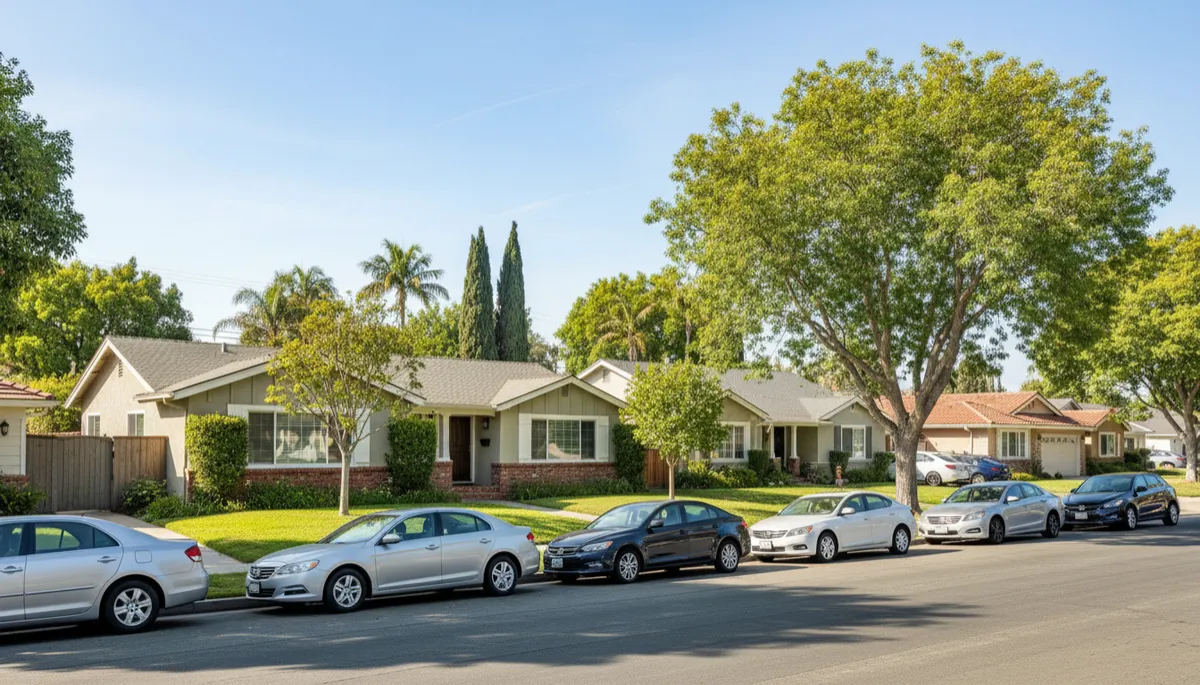
Street-level view of a quiet Torrance CA residential neighborhood with single-family homes...
Tree-lined residential streets and well-kept homes define many Torrance neighborhoods.
Coastal & High-End: Hollywood Riviera, Riviera, Seaside
If budget allows, the coastal neighborhoods are some of the most desirable in all of Southern California:
Hollywood Riviera: Hillside streets, ocean views, and easy beach access. Frequently cited as one of the most attractive neighborhoods in the region, with crime around 32% lower than the city average. Homes are pricey and competition is fierce.
Riviera & South Torrance: Quiet, coastal-adjacent living with excellent schools and a very family-focused atmosphere. Realtors often highlight these areas as “dream neighborhoods” for those who can afford them.
Seaside (Sleepy Hollow): Known for its tranquil feel, strong community, and top-rated schools. Only about two miles from the beach, it’s often near the top of “best neighborhoods in Torrance” lists.
Family Favorites: West Torrance, Southwood, Marble Estates
For many families, West Torrance and Southwood hit the sweet spot between price, safety, and amenities. They offer larger lots, good access to Torrance Beach and the Strand bike path, and some of the city’s most sought-after school zones. Southwood is regularly listed among the safest areas in Torrance.
Marble Estates also gets glowing reviews from locals—especially families with young kids—thanks to its kid-friendly streets, parks, and tight-knit community feel.
Historic & Walkable: Old Torrance (Downtown)
If you want more character and walkability, Old Torrance is worth a serious look. It features historic craftsman homes, local eateries, and a small but charming downtown core. Younger residents and people who prioritize being able to walk to coffee shops and restaurants often gravitate here.
The trade-off? Crime rates run higher than in some western neighborhoods, and housing can be older or more compact. For some, the charm outweighs those drawbacks; for others, the quieter western tracts win out.
More Affordable & Entry-Level: North, East Torrance, Merit-Carson
In a city where the median home price is around $1.1 million, “affordable” is relative. Still, neighborhoods like North Torrance, East Torrance, and areas around Del Amo can offer somewhat lower price points and more entry-level options. Merit–Carson and Springwood, for example, may have homes in the $600K–$800K range—still expensive, but more reachable for many buyers compared to coastal enclaves.
Some residents note that eastern and northeastern parts of Torrance feel more industrial or less polished, and proximity to El Camino College can bring more traffic and student activity. For budget-conscious buyers or renters, though, these areas can be a practical way to get into the city.
Schools, Safety, and Community: Big Reasons People Choose Torrance
One of the strongest selling points for living in Torrance, CA is its reputation for good schools and relative safety. The Torrance Unified School District is well-regarded, with several campuses recognized as California Distinguished Schools. South High School, for example, ranks highly both statewide and nationally, making neighborhoods in its zone particularly competitive.
Safety data backs up the perception that Torrance is a secure place to live. Multiple sources highlight low crime rates compared with many other parts of Los Angeles County, and several micro-neighborhoods—like La Romeria Park, Southwood, and parts of Hollywood Riviera—rank among the safest. This is a major reason families are willing to stretch their budgets to move here.
💡 Pro Tip: If schools are a top priority, focus your Torrance neighborhood search on South Torrance, Riviera, Seaside, and Marble Estates, and verify school boundaries directly with the district before you buy or sign a lease.
Cost of Living in Torrance: Can You Afford It?
The cost of living in Torrance is where many otherwise-interested movers pause. Housing dominates the conversation, but it’s not the only expense to consider.
Housing: Buying vs. Renting
As of 2026, median home values in Torrance sit a little above $1.1 million, with some sources putting the typical home around $1.12–$1.16 million. That reflects only modest year-over-year price growth, but the absolute number is still steep. Premium neighborhoods like Belmar North or Verdi Estates can easily push into the $1.3–$1.4 million range and beyond.
Renting isn’t exactly cheap either. Average rents cluster between roughly $2,500 and $3,300 per month, depending on unit size and source. Studios might start around the low $1,700s, one-bedrooms around $2,200, and three-bedroom units often land in the mid-$3,000s. Several rental data sources also note annual rent increases in the 6–12% range, which can put pressure on long-term renter budgets.
Everyday Expenses and Income Reality Check
According to Salary.com, a single adult in Torrance can expect to spend around $2,765 per month on overall living costs, including roughly $1,415 for housing, $411 for food, and about $939 for transportation, healthcare, and energy. For a family of four, that estimate jumps to around $5,989 per month. These are averages; your actual numbers will vary based on lifestyle and where in Torrance you live.
A common budgeting rule is to keep housing costs under 30% of your income. With median rent near $2,995, that implies a household income around $120,000—slightly above Torrance’s own median household income (roughly $113,000–$116,000). In other words, many locals are stretching to make the math work, especially renters.
⚠️ Warning: If your income is significantly below six figures and you don’t have roommates or a partner to share costs, living in Torrance may feel financially tight, particularly once you factor in car ownership, childcare, and healthcare.
Pros and Cons: A Balanced Torrance Review
The Upside of Living in Torrance
Strong schools and educated community: High educational attainment, reputable public schools, and many families invested in academics and extracurriculars.
Safety: Lower crime than many parts of LA County, with several micro-neighborhoods ranking among the safest in the region.
Coastal access and weather: Close to beaches, with classic Southern California sunshine and mild temperatures most of the year.
Diverse food and culture: Excellent Japanese and pan-Asian food scene, plus a mix of cultural festivals and community events.
The Downsides You Shouldn’t Ignore
High housing costs: Both buying and renting are expensive, and rents have been trending upward year over year.
Car dependence: While some pockets are walkable, most residents rely on cars for daily errands, with traffic bottlenecks during rush hour.
Limited nightlife: Entertainment is spread out, and those seeking a vibrant bar or club scene often head to neighboring cities.
Rental market headaches: Some renters report sudden rent hikes or tough landlord practices, especially in single-family rentals.
Final Verdict: Is Torrance Right for You?
When you pull everything together, Torrance, CA is a genuinely attractive place to live for many people—but it’s not a universal fit. If your priorities include safety, good public schools, proximity to the beach, and a calmer, community-centered lifestyle, Torrance deserves to be high on your shortlist, provided the numbers work for your budget.
On the other hand, if you’re early in your career, on a tighter income, or craving a dense, urban social scene, you may find the high cost of living in Torrance and its car-dependent layout frustrating. In that case, you might compare it with nearby cities like Long Beach, Redondo Beach, or even more inland communities where your housing dollars stretch further.
Ultimately, this Torrance review comes down to trade-offs: pay more, get a lot. For many families and professionals, that equation is worth it. For others, it’s a signal to keep exploring. If you’re serious about living in Torrance, spend time in different neighborhoods—Hollywood Riviera, West Torrance, Old Torrance, and North or East Torrance—at various times of day, and run your own budget with realistic housing numbers. That on-the-ground experience will tell you more than any brochure ever could.